• Welcome to your new Gnomio site

    Now, you are in control!

    Moodle is an open-source Learning Management System (LMS) that provides educators with the tools and features to create and manage online courses. It allows educators to organize course materials, create quizzes and assignments, host discussion forums, and track student progress. Moodle is highly flexible and can be customized to meet the specific needs of different institutions and learning environments.

    Moodle supports both synchronous and asynchronous learning environments, enabling educators to host live webinars, video conferences, and chat sessions, as well as providing a variety of tools that support self-paced learning, including videos, interactive quizzes, and discussion forums. The platform also integrates with other tools and systems, such as Google Apps and plagiarism detection software, to provide a seamless learning experience.

    Moodle is widely used in educational institutions, including universities, K-12 schools, and corporate training programs. It is well-suited to online and blended learning environments and distance education programs. Additionally, Moodle's accessibility features make it a popular choice for learners with disabilities, ensuring that courses are inclusive and accessible to all learners.

    The Moodle community is an active group of users, developers, and educators who contribute to the platform's development and improvement. The community provides support, resources, and documentation for users, as well as a forum for sharing ideas and best practices. Moodle releases regular updates and improvements, ensuring that the platform remains up-to-date with the latest technologies and best practices.
    Links of interest:

    (You can edit or remove this text)

Available courses

This course describes the competencies required to perform home-based care. It involves assessing home based care needs, developing home based care plan, executing home based care plan, evaluating home based care activities and documenting home based care activity outcomes.

This course describes the competencies required to manage community-based groups. It involves identifying target group, mobilizing target group, planning group activities, monitoring group activities, and documenting group activities. 

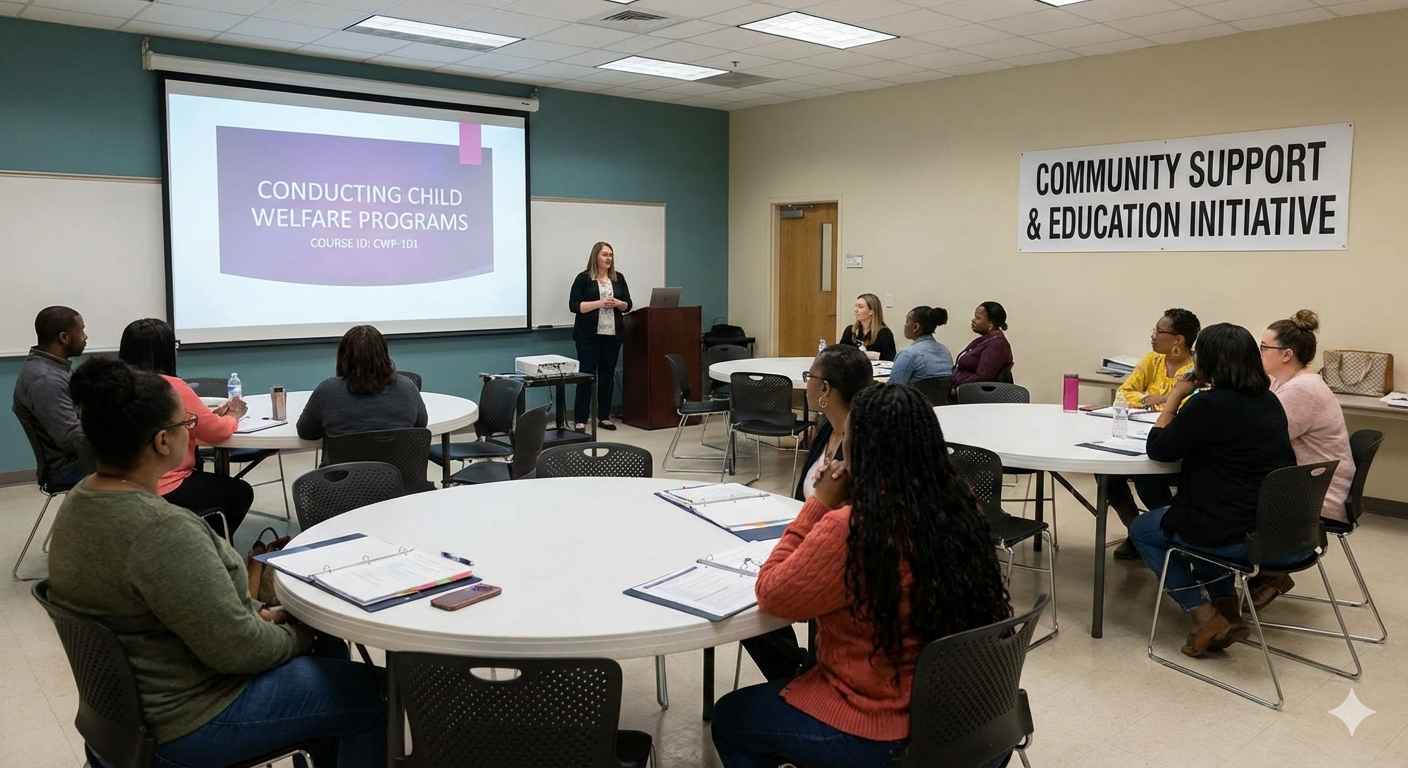
This course covers the competencies required to conduct child welfare programmes. It involves assessing child welfare issues, developing child welfare program plan, implementing child welfare program plan, evaluating child welfare intervention plan outcomes and documenting child welfare programs.

This course describes the competencies required to conduct social work case management. It involves assessing social work cases, developing case management plan, implementing case management plan, performing case management evaluation and preparing case management documentation     .

This course specifies the competencies required to conduct community empowerment. It entails: Assessing community needs, developing community empowerment plan, implementing community empowerment plan, performing community empowerment outcomes evaluation and documenting community empowerment activity outcomes

This course covers the competencies required to provide psychosocial support. It involves assessing client’s psycho-social support needs, developing psycho-social support plan, implementing psycho-social support plan, evaluating psycho-social support activities

This course covers the competencies required to apply digital literacy. It involves operating computer devices, solving tasks using the Office suite, accessing online/offline data and information, performing online communication and collaboration, applying cyber security skills and performing jobs online. It also involves applying job entry techniques

This course specifies the competencies required to coordinate disaster management. It involves conducting disaster risk assessment, developing disaster intervention plan, executing disaster intervention plan, evaluating disaster intervention plan and conducting post disaster development.  

This course describes the competencies required to carry out advocacy and lobbying activities. It involves conducting problem analysis, developing advocacy and lobbying plan, implementing advocacy action plan, evaluating advocacy and lobbying activity outcomes and documenting advocacy and lobbying activity outcomes.

This course covers competencies required to effectively apply work ethics and practices. It involves the ability to: conduct self-management, promote ethical work practices and values, promote teamwork, manage workplace conflicts, maintain professional and personal development, apply problem-solving and promote customer care.

This   course   describes   the   competencies   required   to   coordinate   rehabilitation and reintegration programs. It involves establishing social economic maladjustment, assessing client’s needs, developing client’s recovery plan, executing client’s recovery plan, reintegrating client to the family and community, conducting client reintegration follow up.

This course covers the competencies required to carry out resource mobilization and management. It entails institutionalizing resource mobilization, assessing community resources, formulating resource mobilization strategies, pitching for funding, monitoring community resources, evaluating community resource mobilization process, documenting community resource mobilization outcomes.

This course cover the competencies required to manage social work services. It involves preparing to provide managerial functions in social work, carry out management functions in social work agencies and evaluating social services. 

This course describes the competencies required to manage community groups. It involves identifying target group, mobilizing target group, planning group activities, monitoring group activities, and documenting group activities.

This course covers the competencies required to carry out child welfare programmes. It involves assessing child welfare issues, developing child welfare program plan, implementing child welfare program plan, evaluating child welfare intervention plan outcomes and documenting child welfare programs.

This course describes the competencies required to perform home-based care. It involves assessing home based care needs, developing home based care plan, executing home based care plan, evaluating home-based care activities and documenting home based care activity outcomes.

This course covers the competencies required to demonstrate communication skills. It involves applying communication channels, written, non-verbal, oral, and group communication skills. 

This course covers the competencies required to conduct social policy administration. It involves carrying out social policy analysis, reviewing social policy, formulating social policy, carrying out social policy implementation and evaluating and documenting social policy.  

This course covers the competencies required to conduct social research work. It involves identifying research problem, developing research plan, implementing research plan, and preparing research report.

This course describes the competencies required to manage community projects. It involves assessing community projects, developing community project plan, conducting project risk management and implementing community project plan.

This course covers the competencies required to demonstrate an understanding of entrepreneurship. It involves demonstrating an understanding of financial literacy, applying entrepreneurial concepts identifying entrepreneurship opportunities, applying business legal aspects, developing business innovative strategies, and developing business plans.